

05 / AI ROADMAP

Intelligence in development

Our AI development roadmap builds on connected charging data to support better planning, equipment investigation and operator decisions. These capabilities are planned development.

Illustrative fleet depot with electric vehicles connected to charging infrastructurePLANNED DEVELOPMENT

THREE DEVELOPMENT PRIORITIES

Practical intelligence for charging

Each priority addresses a specific operating question and starts with the information available from the site.

01Planned development
Recorded demandForecast concept
EarlierNowAhead

Relative demand · illustrative data

Charging-demand forecasting

Use charging history and operating schedules to estimate upcoming demand and inform charging plans.

Data foundation
Session history, site demand and vehicle schedules
Intended output
Demand estimates for operator planning
02Planned development
Telemetry review
Unusual patternInvestigate

Concept view · not a fault prediction

Equipment-health insights

Analyse available telemetry to identify unusual patterns and help service teams prioritise investigation.

Data foundation
Available temperatures, loading and fault history
Intended output
Patterns to investigate with supporting evidence
03Planned development
What needs attention at this site?
Proposed summary format

Review recurring connector alerts alongside recent session records.

Event historyTechnical guide

Concept response · operator review required

Operator assistance

Bring events and relevant technical information together in concise summaries for human review.

Data foundation
Event records and approved technical documentation
Intended output
Traceable summaries and suggested checks

These capabilities are not currently released features. Development depends on suitable data, defined integrations and validation in representative operating conditions.

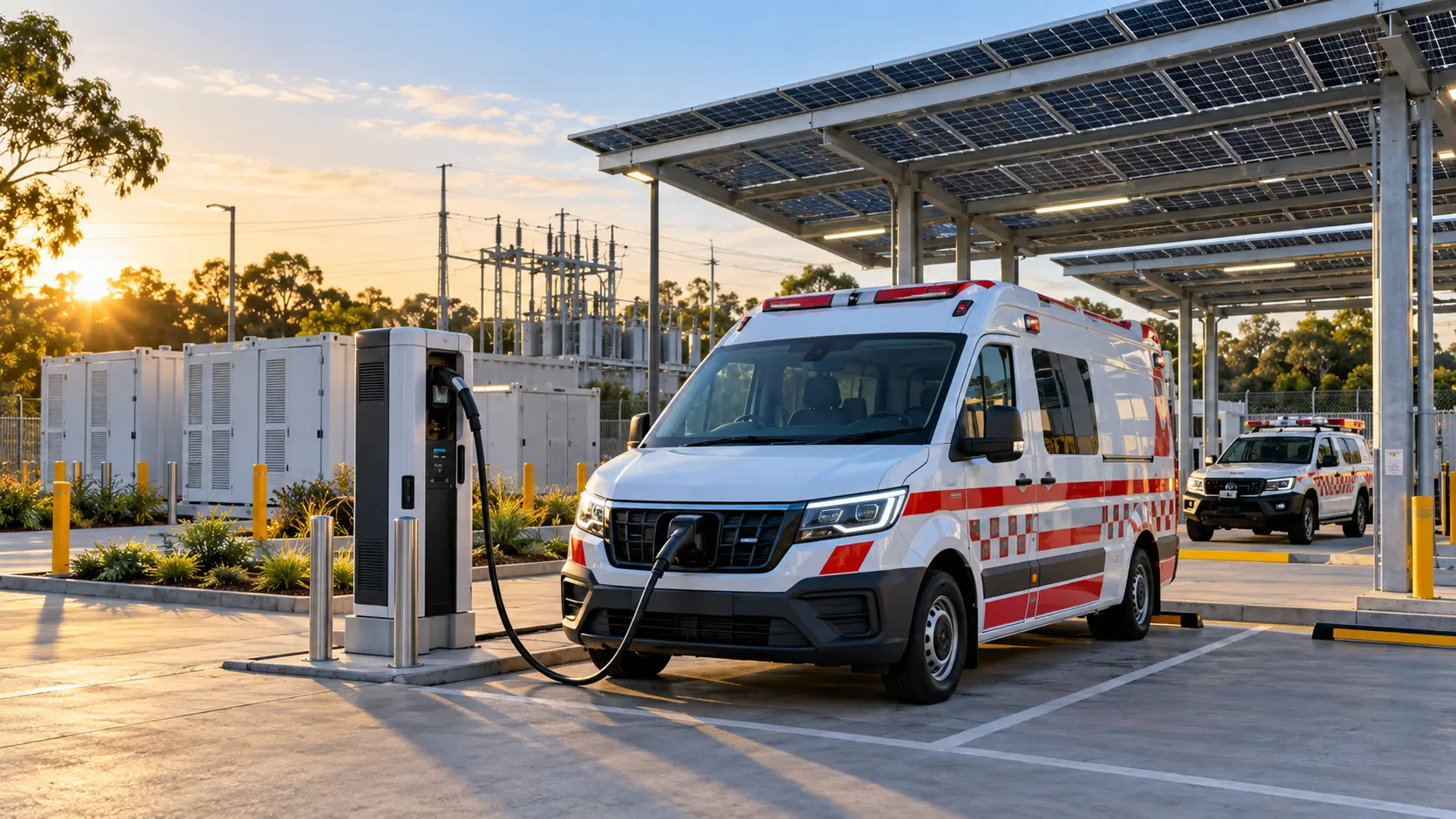
Illustrative emergency fleet charging site with grid, solar and battery infrastructure
Illustrative use case · planned analytics

FLEET USE CASE

Ready for the next shift

At a fleet depot, the proposed AI layer would help teams review upcoming demand and identify issues needing attention before vehicles are required.

  1. 01

    Understand the next shift

    Combine suitable charging history with agreed vehicle schedules to estimate the depot's upcoming charging demand.

  2. 02

    Highlight what needs attention

    Identify charging plans or equipment patterns that warrant review, with the supporting data available to the operator.

  3. 03

    Support an informed decision

    Present a concise summary for the fleet team to review before acting within the site's operating limits.

For emergency fleets, readiness insights would require agreed vehicle-status and departure data. Priorities remain with the operator; electrical protection and resilience depend on the engineered site system.

TECHNICAL OVERVIEW

How AI would connect

The proposed analytics layer would use selected operating data and return insights for review. Equipment protection and configured site controls remain part of the operational system.

SYSTEM ARCHITECTUREIllustrative deployment

Site equipment

  • Chargers and power modules
  • Site meters
  • Solar and storage, where integrated

Local coordination

Equipment protection, site limits and the agreed charging-control strategy

Controller scope defined by project

Connected Operations

Charger status, sessions, site information, diagnostics and reporting

Functions configured for the deployment
Selected operating dataPlanned analytics layer
Planned development

AI-assisted insights

Demand forecasts · Equipment-health analysis · Event summaries

Operator review

Review evidence and agree actions within the site’s operating limits

Solid links show the configured operating layer. Dashed links show the proposed AI data and recommendation flow. AI would support decisions; equipment protection and local control remain separate. This is a reference architecture, not a released controller specification.